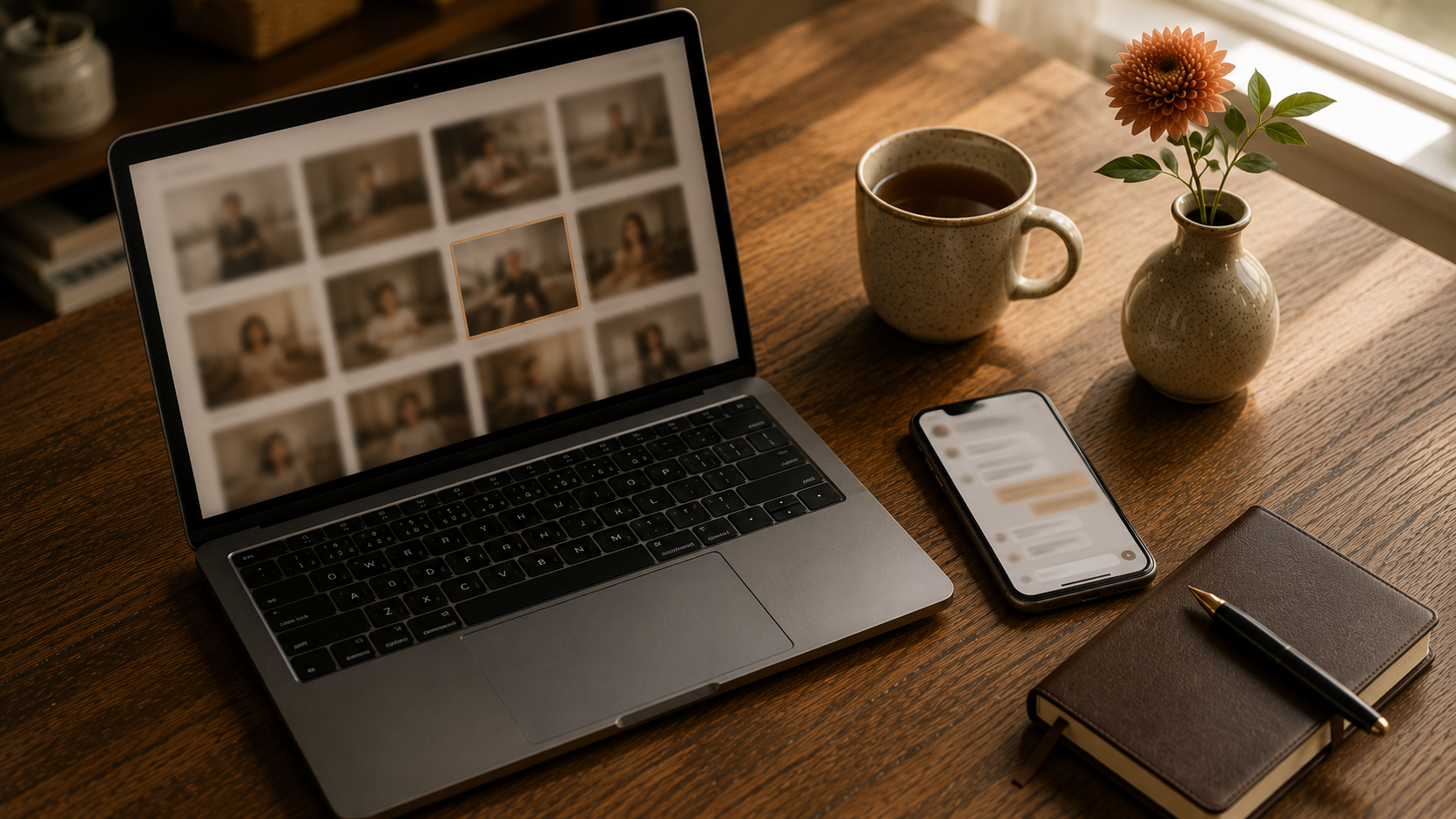

Online dating gets stronger when communication feels more personal. Words matter, but words alone don't always create the clearest impression. Sometimes a man understands a woman better when he sees more of her world; sometimes she understands him better when he shares more than a written line.
Photos and videos in chat and in the Mailbox make online dating more personal because they add context, mood, and presence. They help communication move beyond plain text and make the connection feel more specific and easier to feel. Used well, media does not replace conversation — it gives conversation more depth.
Why photos and videos change online communication
A lot of online dating stays too flat for too long. Two people exchange messages, but the communication still feels abstract. A man reads her words but doesn't fully feel the moment behind them. She reads his message but doesn't always catch the tone or atmosphere of what he wants to share.
Media closes that gap. Photos and videos add a visual layer that helps both people understand each other more accurately. That understanding runs both ways — you get more to read her by, and she gets more of who you are to read you by. A man may be warmer, more thoughtful, or more expressive than plain text can show; when he shares media naturally, that side of him comes through more clearly. The same is true for her.
This matters because real material leads to better communication. Less guessing, less building on assumptions, more responding to what is actually there.
How media works in chat and in Mailbox
Media works differently in different formats. Chat and Mailbox each carry it well, but for different reasons.
In live chat
In live chat, media works best when it keeps the exchange moving. A photo or a short video can trigger a more immediate reaction, make a topic feel more alive, or explain something without needing to type paragraphs. Instead of only describing something, you can show part of it; instead of only imagining her mood, you may catch it more directly through what she shares. The point in chat is not to send more media — it is to add something that helps the conversation stay natural and easy to continue.
In Mailbox
The Mailbox gives communication more room, so media there can carry more weight. A photo or short video inside a letter can support a whole story — a memory, a mood, a place, a personal detail — and make the letter feel more vivid and more complete. The same photo that would feel casual in chat can feel deliberate in a letter, because it is part of something longer and more considered.
For the fuller picture of what letters can carry, see why letters still matter in online dating.
What makes media feel personal instead of random
Media lands well when it supports communication instead of interrupting it. A photo or video should feel connected to what is being discussed, not dropped in without purpose. When it matches the tone of the exchange, it makes communication feel more personal. When it feels random, it adds much less.
The pattern is usually the same. Strong use of media does three things at once:
- Fits the moment — connected to what you were just talking about, or to something she shared.
- Adds something real — a place, a mood, a scene, a detail she couldn't picture from words alone.
- Gives her something to respond to — an opening, not a closing statement.
When those three things are in place, media makes the exchange more vivid without asking her to do more work. When any of them is missing, it can feel disconnected or performative.
When she sends media — how to respond
Noticing that she sent something is only half of it. What matters more is how you respond. Look at what her photo or video actually shows — the setting, the mood, the detail, the way she chose to share the moment. Let that shape your reply.
"Nice photo" is polite but tells her nothing. "That looks like exactly the kind of evening you were describing yesterday" tells her you were paying attention. The specific reaction is almost always stronger than the general one, because it shows the media was not just noticed but actually seen.

Frequently Asked Questions
Is media in chat better than media in Mailbox?
Neither is better — they do different things. Media in chat usually feels immediate and casual, best for keeping the exchange moving. Media in the Mailbox usually feels more considered, best for supporting a longer message or a mood you want to carry.
How often should I send photos or videos?
Only when they add something the words don't. Sending media too often makes each new one land less, because there is no contrast. A few well-timed shares over weeks usually make a stronger impression than daily attachments.
What if she does not share media back?
Not everyone shares at the same pace, and not seeing media from her doesn't automatically mean low interest. Some women warm up to sharing more slowly. Keep sending yours when it feels natural, and let hers come at whatever rhythm she chooses.
What kind of photos or videos work best?
Real ones. Everyday scenes — where you live, where you were walking, what you were cooking, the view from your window — usually beat posed or professional photos. Media works because it feels real, not because it looks polished.
A better way to make online dating feel more personal
If you want online dating to feel less flat, don't rely only on text. Use media in chat and Mailbox in a way that supports the conversation and makes it easier to feel — not more of it, but the right pieces at the right moments. When it works, it turns exchanges from words on a screen into moments both people can actually picture.
Media is one part of a wider rhythm — chat for continuity, letters for depth, video for presence, gestures for care. For the fuller view of how they work together, see how to combine chat, letters, and video chat.